Network Vendor Support Services in Canada
Trusted by







Which of these is costing you right now?
Four of the reasons Canadian mid-market teams call us. If one of these is yours, the page below says which piece of work fixes it.
Your SmartNet renewal costs more than the box is worth
Nobody re-priced the contract when the hardware depreciated, so you're paying list on a switch you'd replace for less. That's the most common line item we cut.
The TAC case is open and nothing is moving
You've uploaded the logs twice and the case is still at tier one. Somebody has to read the config and say what's wrong, which isn't a ticket process.
A directive gave you seven days to patch everything
CISA did exactly that to F5 owners in October 2025, and the hard part wasn't patching. It was producing the inventory that proved you'd found every appliance.
The box is end of life and support quotes stopped
The vendor wants you on the new platform and the old one still runs your business. Third-party support buys the time you need to migrate properly.
Pick the platform you need covered, or the whole estate.
Every network vendor support line in this practice, with what it covers and who it's for.
- Cisco ISECanadian Cisco ISE deployment and support: version and patch state first, then policy, posture and guest access.
- Cisco ACICisco ACI support and migration for Canadian data centres, from a team that holds the CCIE.
- Cisco SupportCanadian Cisco support from a CCIE-led team: what's actually covered, escalation past TAC, and licensing that stops surprising you.
- Palo Alto SupportCanadian Palo Alto firewall support from a CCIE-led team, including the renewal nobody forecasts.
- F5 BIG-IP SupportF5 BIG-IP support for Canadian estates, from the upgrade you deferred to the exposure you inherited.



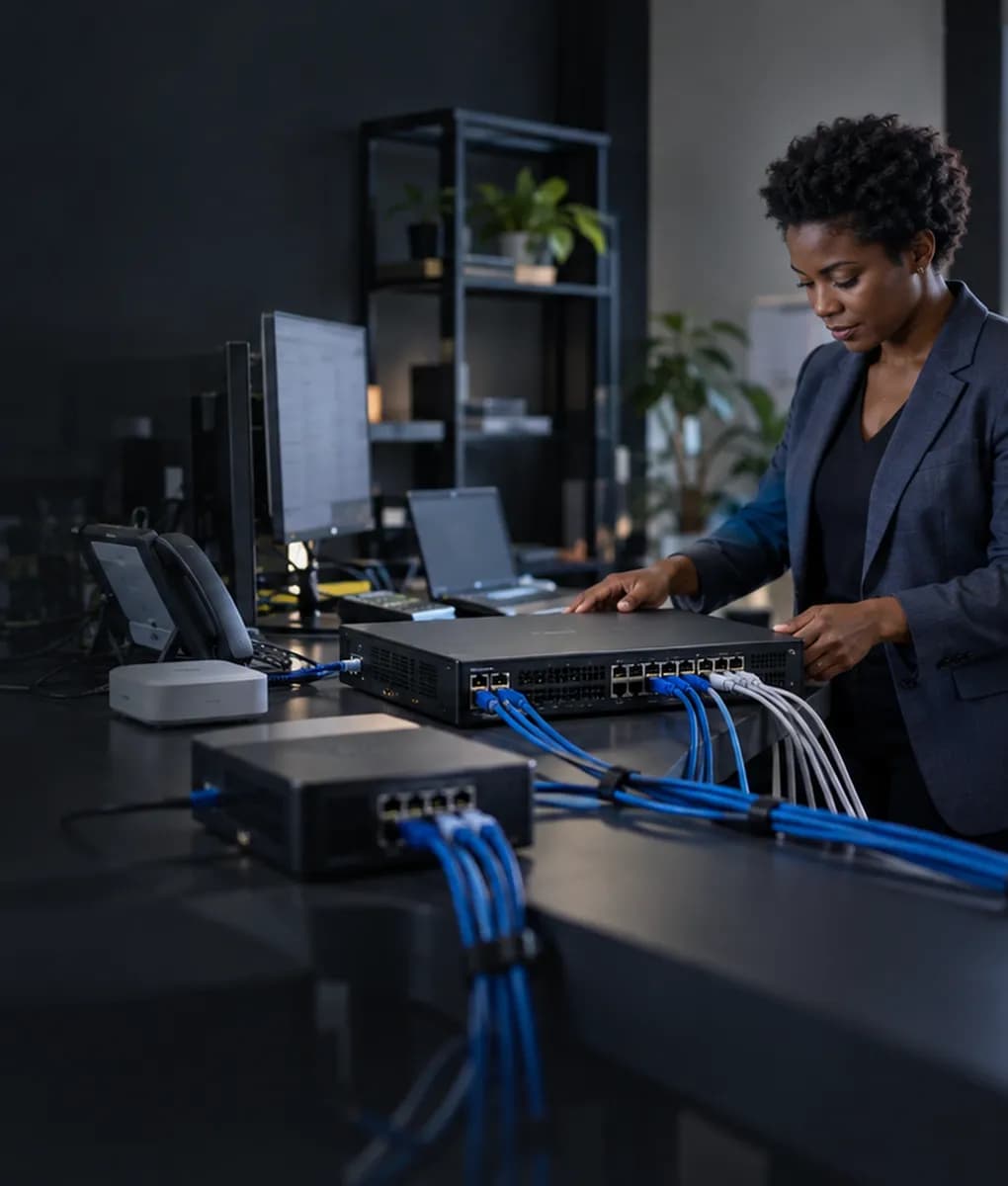

What network vendor support actually covers.
Three things you're actually buying, and only one of them is a phone number. Cisco support is where most estates start, and the same three apply whichever vendor is on the label. Take the piece you're short of, or the whole contract.
Contract and lifecycle
What you're paying, for which serial numbers, and whether it's worth it. Contract consolidation across vendors, renewal timing, end-of-life planning, and the third party maintenance option when the vendor's quote stops making sense. Vendor maintenance is the line nobody audits, and it's usually where the first saving is.
Escalation and engineering
Somebody who reads the configuration instead of asking you to upload it again. We hold the vendor case, translate between their tier one and your outage, and fix what we can ourselves. Multi vendor support means one call when the problem sits between two boxes from different makers.
Advisories and patching
Reading the vendor's security bulletins so you don't have to, and acting on the ones that matter. Version tracking per device, patch windows, and the inventory a regulator or an emergency directive will ask you to produce. This is the pillar that turns a bad week into a Tuesday.
Does Network Vendor Support Services work the same way in every industry?
No. The Network Vendor Support Services work is the same craft in every sector, but the conditions around it are not. In manufacturing that means production lines that can't stop for a patch window; in energy and mining, SCADA networks and remote sites that can't go offline; and in healthcare, provincial health privacy law. We keep the service and change the part that bends.

A production line can't stop for a patch window, so changes have to fit the schedule.
OT and IT convergence. A flat network between plant and office is the common failure, and segmentation is the fix. It's a design problem, not a purchase.

SCADA networks and remote sites can't go offline, so changes are planned around them.
SCADA and ICS. Availability outranks confidentiality here, and you often can't take a system offline to investigate what happened on it.

Health information sits under provincial privacy law, and your IT provider is usually the custodian's agent.
PHIPA. Ontario's health privacy act, with its own definition of a custodian and its own duties for the agents acting on a custodian's behalf. Your IT provider is usually an agent.

Solicitor-client privilege decides how a firm can handle its data.
Law Society obligations. Confidentiality and competence duties reach the technology you practise with, and the vendors who touch client information. The firm is expected to have assessed the provider, which means the provider should arrive with the answers.

Protected A, B and C data handling decides where the work can run and who can touch it.
Protected A, B and C. Each level changes where the data can physically live, who can reach it, and what you have to prove about both. Most files turn on Protected B, and most disagreements turn on what counts as reaching it.
By the numbers
Years of experience
Enterprise deployments
Senior engineers
Support

Want a Senior IT Consultant's Read on Your Setup?
Tell us what you run today and what keeps breaking. A senior SMEnode engineer replies within an hour with a first read on scope, risk and timing. No sales handoff.
Request a consultHow a network vendor support engagement runs.
Four stages. The first one is an audit of what you already pay for, and it often ends the conversation cheaply.

Engagement phases
Phases 01 to 04
Inventory the estate and the contracts
Every serial number, its software version, its end-of-support date, and what you're currently paying to cover it. Most clients discover they're paying for boxes that left the building.
Say what to keep on the vendor
Some kit belongs on the manufacturer's contract and some doesn't, and the split is about risk rather than loyalty. We'll tell you which and show the arithmetic.
Take the escalation path
We become the first call, hold the vendor case, and keep a CCIE on the hard ones. You stop being the translator between two support desks that don't talk.
Run the advisory calendar
New bulletin, we assess whether it touches your versions, and you get a decision rather than a forward. The inventory stays current because it has to.
It's never the ticket
Where Canadian vendor support arrangements actually break.
I run this practice, so I'll be direct about the two failures I see most, because neither is a ticket problem and both are expensive to unwind.
Paying list on kit you'd never buy again
A renewal lands, finance approves it because it looks like last year, and nobody checks it against a depreciation schedule. So you pay list price on a switch whose replacement now costs less than the contract. The contract renews per site, the hardware ages per device, and nobody reconciles the two lists. The audit is a day's work and it's the cheapest thing here: pull every serial, match it to what you pay, and sort by the ratio. The top of that list usually pays for the engagement.
Support you only find out you don't have during an incident
The second failure shows up once, at the worst time. CISA ordered every US federal agency to patch F5 BIG-IP within a week in October 2025, after the vendor's source code and details of unpatched flaws were taken, and to file a full appliance inventory by December. That second deadline is the one that hurt, because it needed a list nobody owned. If that landed on you tomorrow, the question isn't whether you have a contract. It's whether anybody can tell you, in an hour, which versions you run and where. That answer is the product.

What do you need from Network Vendor Support Services?
Tell us who you are and what you're working on. A senior engineer reads your message before replying, so the first answer is a real read on scope, risk and timing, within an hour, 24/7. Nothing here is a commitment, and we'll tell you plainly if we're not the right fit.
Your request
- Service
- Network Vendor Support Services
What happens next
- A senior engineer replies within an hour, 24/7, never an SDR.
- We book a 30-minute call to listen, sketch options, and flag risks.
- You get a scoped statement of work within 3 business days.
Call the 24/7 line
+1 514-465-1584Network vendor support in Canada, answered plainly.
The six questions we get asked before every engagement.
Regulated sectors, and where to read next
These disciplines share the same senior team and tend to land together. Follow the thread to the next one.