Managed help desk and service desk services in Canada
Trusted by







IT help desk services that fix the cause, not just the ticket
One Canadian desk owns your tickets, the process behind them and every escalation, from the first call to the fix.
Tier 1 and 2 support
Passwords, access, laptops, apps and the everyday problems, handled by technicians who fix things rather than just log them. Most tickets are solved at this level, often on the first call.
An ITIL service desk process
Incidents, problems, requests and changes each follow a defined process, so nothing gets lost between shifts. Each ticket is tagged with a category and a likely cause, which is how repeat problems get found.
Tier 3 senior escalation
The hard faults go straight to our senior network, server and cloud engineers, in-house. There's no vendor queue in the middle, and nobody asks your staff to explain the problem twice.
What should a managed help desk know about your sector?
Quite a lot. A law firm's desk can't open a client file to fix a printer problem. A clinic in Ontario needs technicians who know not to browse patient records under PHIPA. A plant running three shifts needs someone answering at 3 a.m. We learn these rules during onboarding and write them into the runbooks your technicians follow.
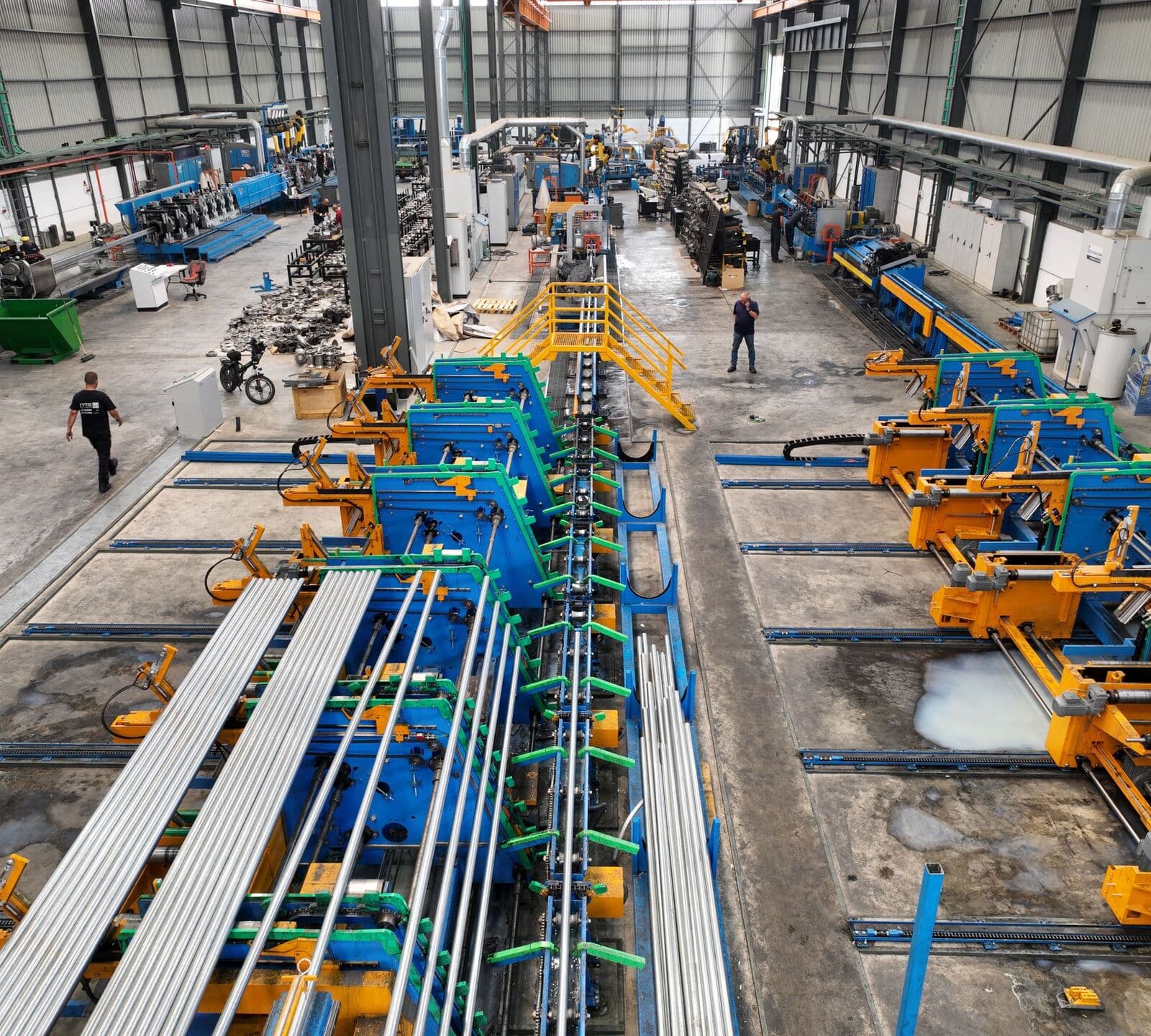
A production line can't stop for a patch window, so changes have to fit the schedule.
OT and IT convergence. A flat network between plant and office is the common failure, and segmentation is the fix. It's a design problem, not a purchase.

Health information sits under provincial privacy law, and your IT provider is usually the custodian's agent.
PHIPA. Ontario's health privacy act, with its own definition of a custodian and its own duties for the agents acting on a custodian's behalf. Your IT provider is usually an agent.

Solicitor-client privilege decides how a firm can handle its data.
Law Society obligations. Confidentiality and competence duties reach the technology you practise with, and the vendors who touch client information. The firm is expected to have assessed the provider, which means the provider should arrive with the answers.

SCADA networks and remote sites can't go offline, so changes are planned around them.
SCADA and ICS. Availability outranks confidentiality here, and you often can't take a system offline to investigate what happened on it.

OSFI's technology and cyber risk rules set what an examiner will ask to see.
OSFI B-13. Technology and cyber risk across three domains: governance, technology operations and resilience, and cyber security. It binds federally regulated institutions, and only those.

Help desk or a full service desk?
People often swap the two names, but they're not the same. A help desk answers calls and fixes each person's issue as it comes in. A service desk handles those calls as well, and also owns the process behind them: why the problem happened, how requests and changes are handled, and what gets fixed so the same ticket stops coming back. Our managed service desk includes both.
Help desk
- Fixes the problem in front of it, then closes the ticket.
- Works ticket by ticket, mostly reacting to calls and emails.
- Reports how many tickets came in and how fast.
- Fine for a small team with simple, stable systems.
Service desk
- Fixes it, then looks for the cause behind it.
- Runs incident, problem, request and change management as one process.
- Reports the top repeat causes and what removing them would take.
- Better once the same faults keep eating your team's week.
Want AI to take some of the simple tickets? Read what to automate first on an AI help desk, and what to keep human.
Planning help desk outsourcing in Canada? Tell us about your team
Tell us who you are and what you're working on. A senior engineer reads your message before replying, so the first answer is a real read on scope, risk and timing, within an hour, 24/7. Nothing here is a commitment, and we'll tell you plainly if we're not the right fit.
Your request
- Service
- Managed Service Desk
What happens next
- A senior engineer replies within an hour, 24/7, never an SDR.
- We book a 30-minute call to listen, sketch options, and flag risks.
- You get a scoped statement of work within 3 business days.
Call the 24/7 line
+1 514-465-1584What does a managed help desk have to get right in Canada?
Most of the job is the same anywhere. These three parts are specific to supporting staff spread across Canada.
Users across several time zones.
Canada's clocks change this year. From 2026-11-01, B.C. stays on UTC-7, Alberta on UTC-6 and Manitoba on UTC-5 all year, while Ontario, Quebec and Atlantic Canada still fall back. In winter, Winnipeg now runs on Toronto time. Windows devices need moving to the new time zones, and meeting invites can shift by an hour. We measure response times in each user's local time, not head office time.
Quebec staff can work in French.
Quebec's Charter of the French Language gives workers the right to do their work in French, and employers have to send written communications to staff in French. For an IT help desk, that means the how-to guides, notices and instructions your Quebec staff receive should be in French. We agree the language for each site during onboarding, so nobody gets an English-only reply by default.
Some tickets are privacy incidents.
The help desk often hears first about a lost laptop or a clicked phishing link. PIPEDA's breach rules require you to record each breach of your security safeguards and hold on to them for two years. Quebec's Law 25 requires a register of confidentiality incidents. Our technicians flag these tickets as possible incidents and pass them to your privacy lead the same day, so the record starts on time.


Want a Senior IT Consultant's Read on Your Setup?
Tell us what you run today and what keeps breaking. A senior SMEnode engineer replies within an hour with a first read on scope, risk and timing. No sales handoff.
Request a consultSetting up your service desk outsourcing in Canada, phase by phase
A desk that doesn't know your setup just asks you the questions you hoped it would answer. That's why we document everything first and take calls second. Your staff get one number and one portal for every request, and nothing changes for them until the runbooks are ready. After go-live, the work shifts from answering tickets to removing the reasons people call.
Engagement phases
Phases 01 to 04
Onboard and document
We list who your users are, where they work, which apps and licences they use, and the faults your team already knows about. Then we write the runbooks, agree the service levels for each priority and set up the portal.
Answer and resolve
Technicians pick up, sort each ticket by priority and fix it. Most tickets end here. Your team sees status and history in the portal, without having to chase anyone for an update.
Escalate
If a ticket needs more than the desk can do, it moves to one of our senior engineers, with the notes already attached. Device problems feed our endpoint management team, so fixes reach every laptop, not just one.
Review and reduce
Once a month we sit down with you to review the faults that keep coming back, what we fixed and what to remove next. Over time this is what makes the queue smaller, and it's where a managed IT services partner earns its place.
Questions IT managers in Canada ask about a managed help desk
These come up in almost every first conversation, usually from an IT manager or an owner who's tired of chasing tickets.
Where this work connects.
These disciplines share the same senior team and tend to land together. Follow the thread to the next one.
- SupportIT Support ServicesEveryday IT support across Canada for staff in the office, at home or on the road.
- ManagedIT Outsourcing ServicesHand over your service desk, infrastructure and projects to one Canadian team.
- SharedCo-Managed ITKeep your IT manager in charge and hand us the tickets, nights and patching.