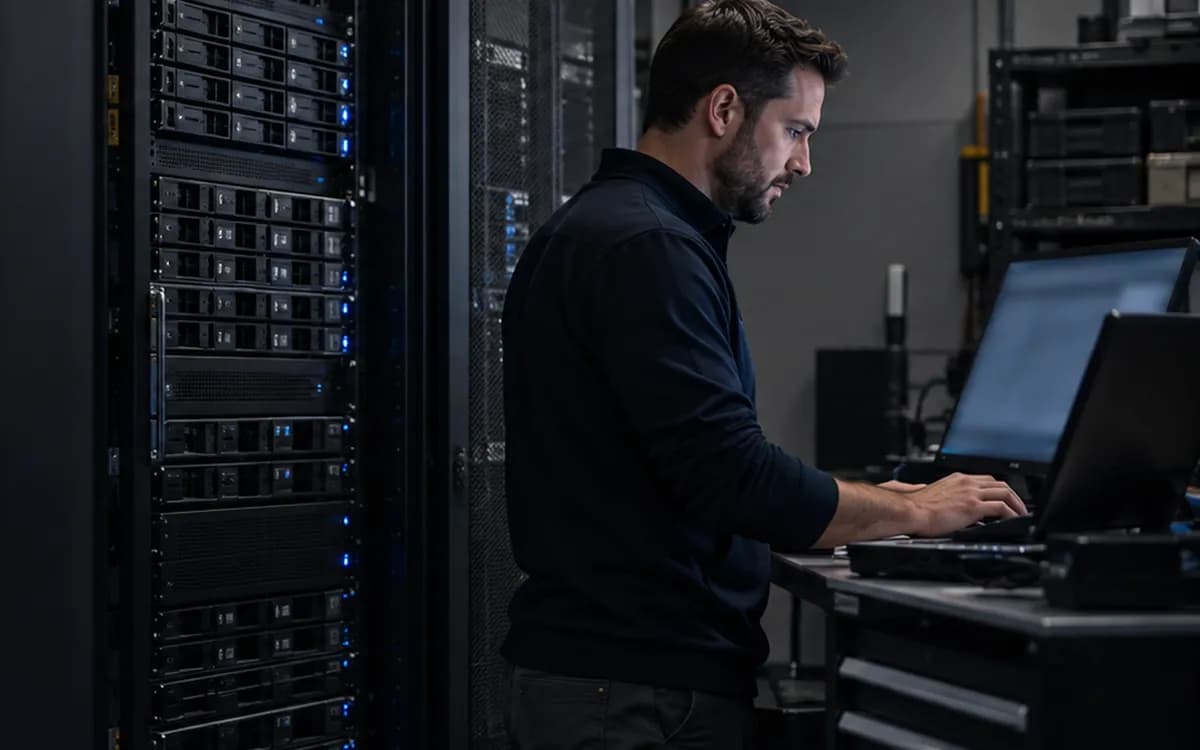
Co-managed IT services in Canada, beside your team
Trusted by







Co-managed IT services, three pillars, one operator.
One Canadian team fills the gaps your internal IT team can't cover alone, inside a hybrid IT model your IT manager still runs.
Coverage and overflow
We take the night shift, the holiday weeks, and the ticket overflow, so nobody on your team is on call forever.
Skills you don't hire for
Canadian CCIE and CCDE depth on tap for the network, security, and cloud work that comes round twice a year. It's how you supplement internal IT teams without opening a role you can't fill.
Tooling and process
Monitoring, patching, and documentation your team keeps using, on licences you own and in consoles they keep admin rights to.
Does Co-Managed IT work the same way in every industry?
No. The Co-Managed IT work is the same craft in every sector, but the conditions around it are not. In manufacturing that means production lines that can't stop for a patch window; in healthcare, provincial health privacy law; and in legal, Law Society duties and solicitor-client privilege. We keep the service and change the part that bends.
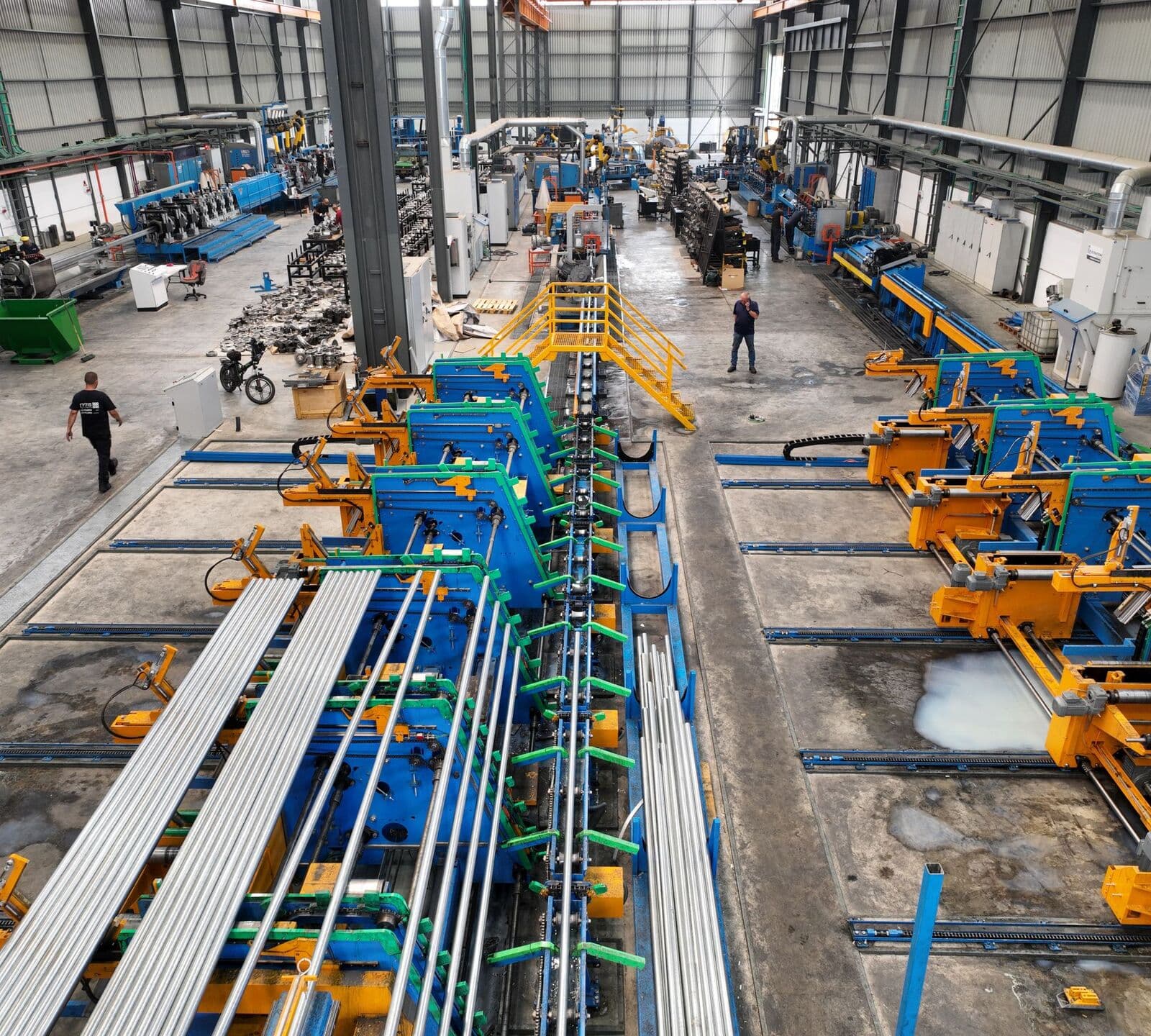
Your plant engineer knows the floor. We cover the rest.
OT and IT convergence. A flat network between plant and office is the common failure, and segmentation is the fix. It's a design problem, not a purchase.

Health information sits under provincial privacy law, and your IT provider is usually the custodian's agent.
PHIPA. Ontario's health privacy act, with its own definition of a custodian and its own duties for the agents acting on a custodian's behalf. Your IT provider is usually an agent.

Solicitor-client privilege decides how a firm can handle its data.
Law Society obligations. Confidentiality and competence duties reach the technology you practise with, and the vendors who touch client information. The firm is expected to have assessed the provider, which means the provider should arrive with the answers.

SCADA networks and remote sites can't go offline, so changes are planned around them.
SCADA and ICS. Availability outranks confidentiality here, and you often can't take a system offline to investigate what happened on it.

OSFI's technology and cyber risk rules set what an examiner will ask to see.
OSFI B-13. Technology and cyber risk across three domains: governance, technology operations and resilience, and cyber security. It binds federally regulated institutions, and only those.
What do you need from Co-Managed IT?
Tell us who you are and what you're working on. A senior engineer reads your message before replying, so the first answer is a real read on scope, risk and timing, within an hour, 24/7. Nothing here is a commitment, and we'll tell you plainly if we're not the right fit.
Your request
- Service
- Co-Managed IT
What happens next
- A senior engineer replies within an hour, 24/7, never an SDR.
- We book a 30-minute call to listen, sketch options, and flag risks.
- You get a scoped statement of work within 3 business days.
Call the 24/7 line
+1 514-465-1584Co-managed IT in Canada, made real.
I run these engagements, so this is written by the engineer who'll sit beside your Canadian team.
The boundary comes before the bundle.
Good starts with a boundary, not a bundle. A shared IT responsibility model only works when it's written down: which systems we touch, which ones you keep, who approves a change at 2am, and who calls the vendor. This hybrid IT model fails in exactly one way, and it's always the same way. Nobody agreed who owned the firewall, so for three weeks nobody patched it.
What stays yours, and what we take.
Here's how we work. We build a responsibility matrix in week one, name every owner, and put escalation paths in writing before we touch production. The honest description is partial IT outsourcing: you keep strategy, budget, and vendor relationships, and we take the parts that don't fit inside one person's week. It isn't IT team augmentation either, because you aren't renting named people by the day. You're buying a defined slice of the function, priced per user or per device. Your licences stay yours, and your documentation stays readable by your own team.
The maths behind the model.
The maths is why most teams land here. A single IT hire in Canada averages about $48.5K a year at help desk level and roughly $56.5K for a support specialist, before benefits or coverage (source: PayScale, 2026). One person still can't cover nights, holidays, and a CCIE-grade network migration in the same quarter. Co-managed lets you supplement internal IT teams with depth you'd never justify hiring full time, and it stops well short of full outsourcing, where there's no internal team left to work beside.

Want a Senior IT Consultant's Read on Your Setup?
Tell us what you run today and what keeps breaking. A senior SMEnode engineer replies within an hour with a first read on scope, risk and timing. No sales handoff.
Request a consultHow a co-managed IT engagement runs.
We sequence the work so your team gains capacity without losing control. Week one is a working session with your IT manager, not a sales call. We map what they already run well, what's slipping, and what they'd hand over tomorrow if they could. From there we take pieces in stages, and every piece comes with a named owner. Every SMEnode engagement runs this way, across Canada.
Engagement phases
Phases 01 to 04
Map and divide
We sit with your IT lead and split the estate: what stays theirs, what becomes ours, and what we share. Out of it comes a written responsibility matrix, escalation paths, and change approval rules. This document is the whole engagement.
Take the first slice
We start with monitoring and after-hours cover, because it's the fastest relief and the lowest risk. Your team keeps working normally. Nothing else moves until this slice is proven.
Add depth
Once cover is stable, we take the specialist work: network, security, cloud, and the projects that keep getting pushed to next quarter.
Review and rebalance
Every quarter we revisit the split with your IT manager. Some things come back in house because your team grew. Some go the other way. The matrix gets updated, not assumed, and you keep every runbook we write.
Co-managed IT questions, answered straight.
These are the questions IT managers actually ask us, usually with some suspicion. Answers are from the engineer who runs the work.
Where this work connects.
These disciplines share the same senior team and tend to land together. Follow the thread to the next one.
- SupportManaged Service DeskManaged help desk and service desk in Canada: tier 1 to tier 3 support, ITIL process, identity checks before resets and a monthly report on causes.
- ManagedBackup and Disaster RecoveryBackup and disaster recovery in Canada built on immutable copies and restores we test on a schedule.
- ManagedIT Outsourcing ServicesIT outsourcing services in Canada: service desk, network, cloud, backups and projects, with PIPEDA and Law 25 terms written into the contract.