On-premise and sovereign AI for data that can't leave Canada
Trusted by






On-premise and sovereign AI, three pillars, one operator.
One Canadian team designs the deployment, racks the hardware, and proves the residency. Private AI only earns the name when you can show where the data sat the whole time, not just where you meant it to sit.
Deployment design
On-premise GPU, a Canadian region with a private endpoint, and an air gapped build, all costed against the same workload before anyone signs a hardware quote.
GPU and platform build
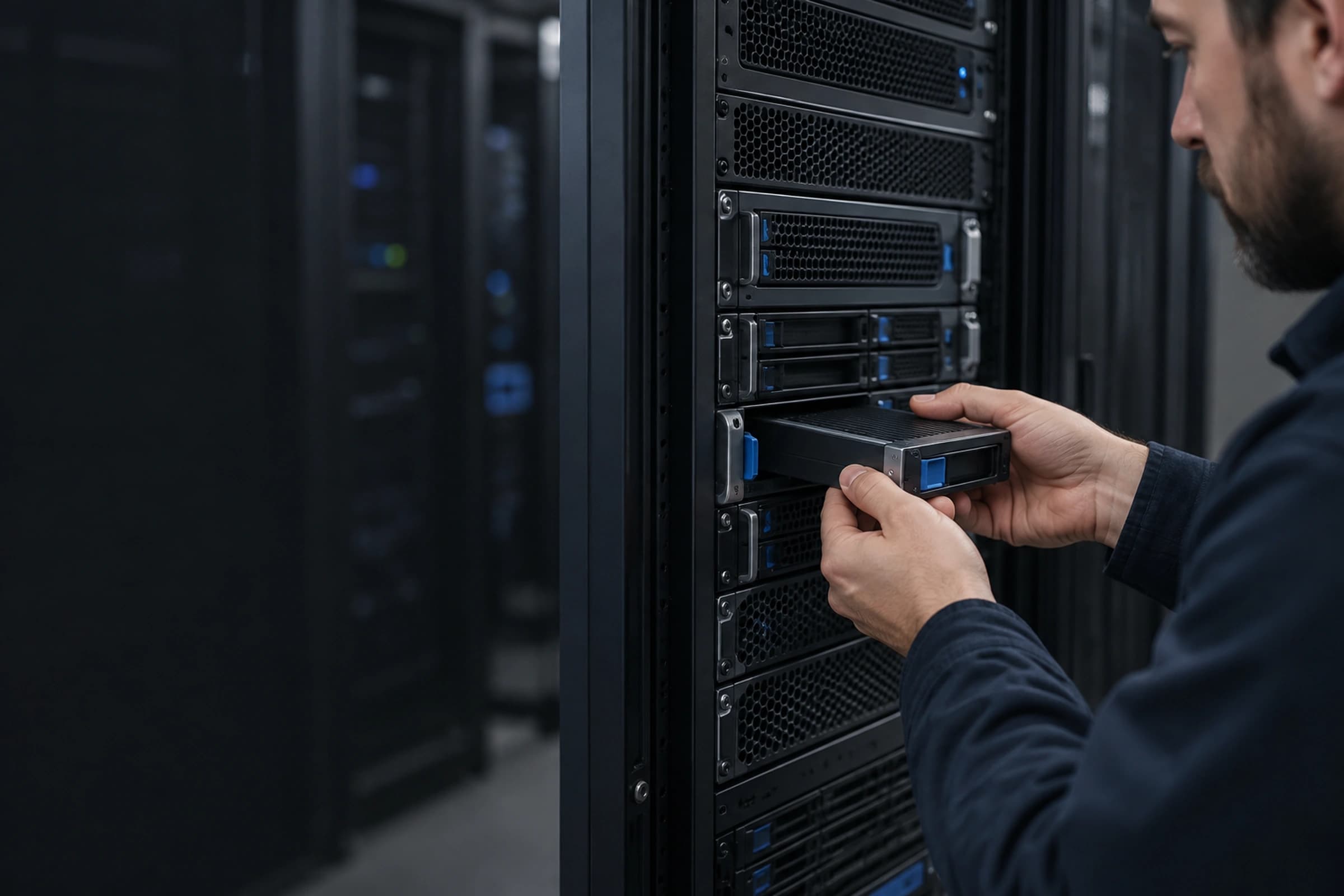
Servers, networking, storage, and orchestration, with a self hosted LLM serving layer behind your own identity provider, so prompts and outputs stay on hardware you control.
Residency and evidence
Where the data sits, where it moves, and the network path, retention, and access documentation your auditor asks for.
Does On-Premise and Sovereign AI work the same way in every industry?
No. The On-Premise and Sovereign AI work is the same craft in every sector, but the conditions around it are not. In government that means Protected A, B and C data handling; in defence and aerospace, controlled goods rules, CMMC and the flow-down from your prime. We keep the service and change the part that bends.

For data that cannot leave Canadian soil, whatever the vendor promises.
Protected A, B and C. Each level changes where the data can physically live, who can reach it, and what you have to prove about both. Most files turn on Protected B, and most disagreements turn on what counts as reaching it.

Controlled data that can't cross a border, including into a model.
ITAR and the Controlled Goods Program. Registration under the Defence Production Act is mandatory before anyone examines, possesses or transfers controlled goods in Canada. Technical data counts, so a drawing sitting on a laptop is in scope.
What do you need from On-Premise and Sovereign AI?
Tell us who you are and what you're working on. A senior engineer reads your message before replying, so the first answer is a real read on scope, risk and timing, within an hour, 24/7. Nothing here is a commitment, and we'll tell you plainly if we're not the right fit.
Your request
- Service
- On-Premise and Sovereign AI
What happens next
- A senior engineer replies within an hour, 24/7, never an SDR.
- We book a 30-minute call to listen, sketch options, and flag risks.
- You get a scoped statement of work within 3 business days.
Call the 24/7 line
+1 514-465-1584Data sovereignty in Canada, made real.
Sovereignty isn't one decision. It's three, and the cheapest of the three is usually the right one. This is written by the engineer who'd build it.
What sovereign AI actually means.
Sovereign AI means you can say where the model runs, where the data sits, and whose law could reach either. Most Canadian buyers worry about one of those three, not all, and the right build changes with which one. 19.2% of Canadian businesses now use AI to produce goods or deliver services, triple the 6.1% recorded two years earlier, and privacy or security is the leading barrier among the ones holding back. For firms with 100 or more employees that barrier hits 30.0% (source: Statistics Canada, 2026).
Three deployments, priced against one workload.
We price three deployments against the same workload before recommending one. On-premise GPU, a local AI deployment on hardware you own and power, when the data legally cannot leave your building or your usage is heavy enough to beat rental economics. A Canadian region with residency controls and a private endpoint when it isn't. Air gapped AI when the classification demands it. Risk sits in buying hardware first: a rack running at a fraction of its capacity costs more than the cloud you were trying to avoid, and no vendor publishes that number for you.
Where the money and the rules are going.
Ottawa is spending on this, which is shifting what buyers expect. Canada committed $2B over five years to the Canadian Sovereign AI Compute Strategy, including up to $1B in public supercomputing and up to $300M to help businesses buy compute (source: ISED Canada, 2026). Rules are firming up alongside the money. Quebec's Law 25 requires a privacy assessment before personal information moves outside the province, including to another province, and OSFI's Guideline E-23 takes effect 2027-05-01 for AI models at federally regulated institutions, whoever built them.
Want a Senior IT Consultant's Read on Your Setup?
Tell us what you run today and what keeps breaking. A senior SMEnode engineer replies within an hour with a first read on scope, risk and timing. No sales handoff.
Request a consultHow a private AI and GPU infrastructure build runs.
Four steps, and the first one stops more projects than it starts. Most sovereign AI conversations open with a hardware quote, which is backwards. We start with the constraint: which law, which contract clause, or which board resolution is actually forcing the data to stay put. Half the time it's narrower than the buyer thought, and a Canadian region with the right controls satisfies it for a fraction of the capital.

Engagement phases
Phases 01 to 04
Name the constraint
Which regulation, contract, or classification is driving this. We read the clause, not the summary, because "our data stays in Canada" and "our data cannot touch a US-controlled provider" are different requirements with very different price tags.
Price three options
On-premise, Canadian region, and air gapped, costed against your real workload and your real usage. You see all three, including the one that earns us less.
Build the platform
GPU servers, networking, storage, model serving, identity, and monitoring. Standard engineering, plus a rollback path for when capacity assumptions turn out wrong.
Prove the residency
Network paths, data flow documentation, retention, and access logs written up for your auditor, your board, or your insurer. Residency you can only assert isn't residency you can defend.
On-premise AI questions, answered straight.
Answers first, including the ones that talk you out of buying hardware. An architect takes the call, not a salesperson.
Where this work connects.
These disciplines share the same senior team and tend to land together. Follow the thread to the next one.
- AIRAG ImplementationCanadian RAG implementation that fixes retrieval quality first, because that's what fails.
- AIAI SecurityCanadian AI security that tests your models and pipelines, then fixes what breaks.
- AIAI Strategy ConsultingCanadian AI strategy consulting that scores use cases, kills the weak ones, and costs the rest.