Hyperconverged infrastructure sized for the licence maths, not the brochure
Trusted by







Hyperconverged infrastructure, three pillars, one operator.
One Canadian team sizes the nodes, moves the workloads, and owns the renewal date.
Size it against the licence
Licensing is per physical core with a floor of sixteen cores per CPU, so a twelve-core socket bills as sixteen (source: Broadcom, 2026). You pay for that floor whether the silicon has those cores or not, which makes socket choice a licensing decision before it is an engineering one.
Move without a maintenance weekend
Workload by workload, with the old estate still running until it isn't needed. Each wave stays reversible until its tests pass, so nobody has to book a Saturday and hope.
Watch the storage meter
Capacity is metered per core now: a vSphere Foundation core entitles you to a quarter of a TiB of vSAN, a Cloud Foundation core to a full TiB (source: Broadcom, 2026). The shape of a node sets your storage ceiling.
Does Hyperconverged Infrastructure work the same way in every industry?
No. The Hyperconverged Infrastructure work is the same craft in every sector, but the conditions around it are not. In manufacturing that means production lines that can't stop for a patch window; in energy and mining, SCADA networks and remote sites that can't go offline; and in healthcare, provincial health privacy law. We keep the service and change the part that bends.
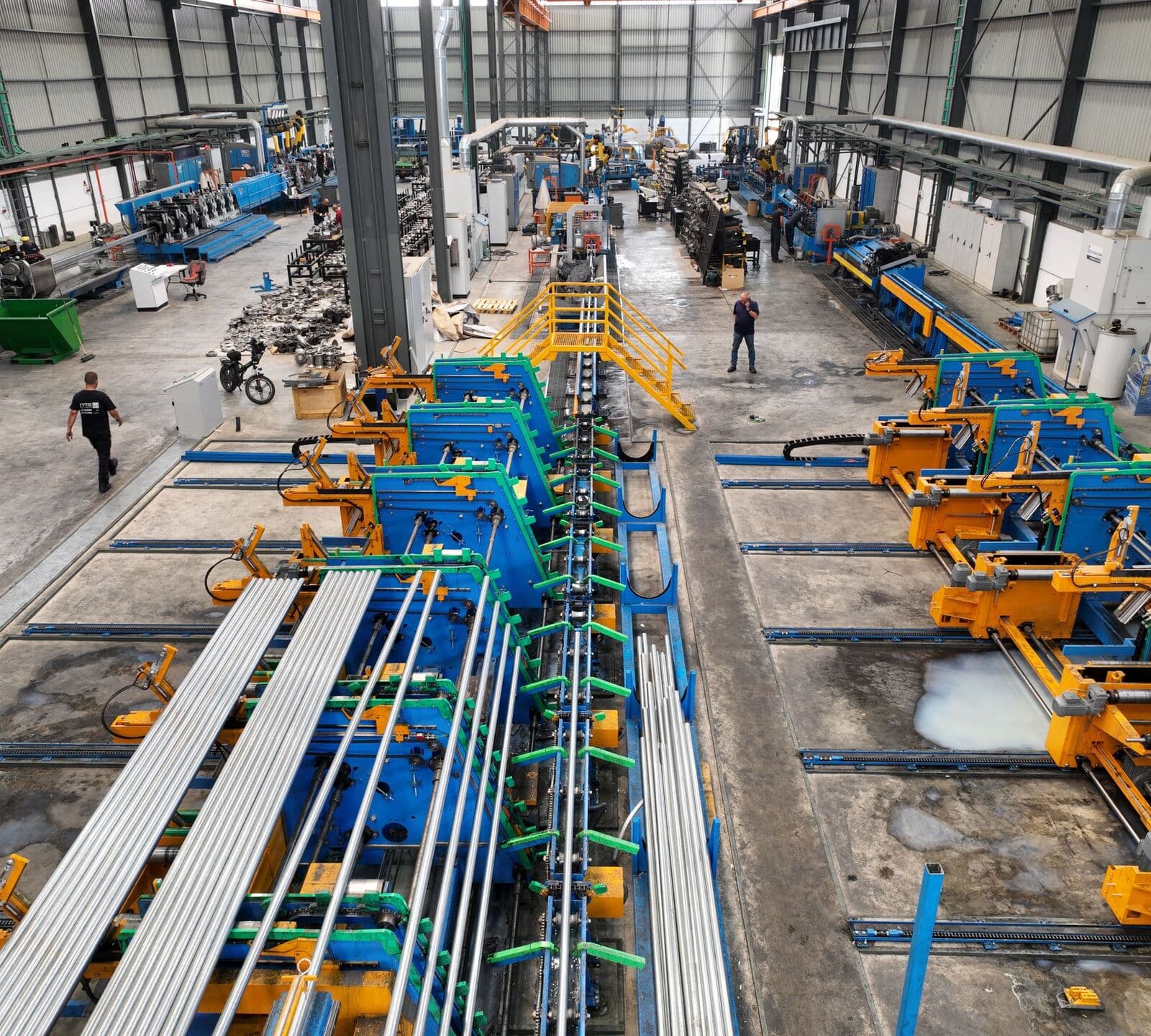
A production line can't stop for a patch window, so changes have to fit the schedule.
OT and IT convergence. A flat network between plant and office is the common failure, and segmentation is the fix. It's a design problem, not a purchase.

SCADA networks and remote sites can't go offline, so changes are planned around them.
SCADA and ICS. Availability outranks confidentiality here, and you often can't take a system offline to investigate what happened on it.

Health information sits under provincial privacy law, and your IT provider is usually the custodian's agent.
PHIPA. Ontario's health privacy act, with its own definition of a custodian and its own duties for the agents acting on a custodian's behalf. Your IT provider is usually an agent.

Solicitor-client privilege decides how a firm can handle its data.
Law Society obligations. Confidentiality and competence duties reach the technology you practise with, and the vendors who touch client information. The firm is expected to have assessed the provider, which means the provider should arrive with the answers.

Protected A, B and C data handling decides where the work can run and who can touch it.
Protected A, B and C. Each level changes where the data can physically live, who can reach it, and what you have to prove about both. Most files turn on Protected B, and most disagreements turn on what counts as reaching it.
What do you need from Hyperconverged Infrastructure?
Tell us who you are and what you're working on. A senior engineer reads your message before replying, so the first answer is a real read on scope, risk and timing, within an hour, 24/7. Nothing here is a commitment, and we'll tell you plainly if we're not the right fit.
Your request
- Service
- Hyperconverged Infrastructure
What happens next
- A senior engineer replies within an hour, 24/7, never an SDR.
- We book a 30-minute call to listen, sketch options, and flag risks.
- You get a scoped statement of work within 3 business days.
Call the 24/7 line
+1 514-465-1584Hyperconverged infrastructure in Canada, made real.
Most of what's written about this technology describes what it is. Almost none of it tells you what now decides the cost.
Cores and capacity stopped being separate decisions.
Licensing is per physical core with a floor of sixteen per socket, so a twelve-core CPU bills as sixteen and a socket choice becomes a licensing choice. Storage went the same way: a vSphere Foundation core entitles you to a quarter of a TiB of vSAN, a Cloud Foundation core to a full TiB (source: Broadcom knowledge base, core counting for VCF, VVF and vSAN). Put those together and node shape sets your ceiling. Two clusters delivering identical usable capacity, one wide and shallow and one narrow and deep, can differ by a large multiple in annual cost.
We size before we shop.
That means counting the workloads that need to live on this cluster, measuring real IOPS and working set rather than allocated disk, then solving for the cheapest legal combination of sockets, cores and capacity that carries them with a node to spare. The usual finding is that the estate is licensed for the storage it was allocated instead of the storage it uses, and that gap is where the money is.
The vendor question comes last, and it's smaller than it looks.
We build both VMware and Nutanix across Canadian estates, and the honest tiebreaker is usually your core-to-capacity ratio and what your team can operate at 2am. Worth knowing while you compare: Gartner stopped publishing the Magic Quadrant for Hyperconverged Infrastructure and folded the market into the Magic Quadrant for Distributed Hybrid Infrastructure, so the best-vendor lists still circulating answer a question the analysts stopped asking.
Want a Senior IT Consultant's Read on Your Setup?
Tell us what you run today and what keeps breaking. A senior SMEnode engineer replies within an hour with a first read on scope, risk and timing. No sales handoff.
Request a consultHow our HCI migration and sizing work runs.
Four steps, and step 01 is counting rather than quoting. Before anybody sizes a node we want the workload inventory with real numbers attached: peak IOPS, actual working set, memory in use rather than memory assigned, and which of these systems could leave the cluster entirely. That last column is usually the cheapest line in the whole project, because a workload that moves elsewhere is a workload you never licence again.

Engagement phases
Phases 01 to 04
Inventory and measure
Every workload with real IOPS, working set and memory in use, plus an honest column for the ones that don't belong on this cluster at all.
Solve the sizing
Sockets, cores and capacity worked as one problem against the licence terms, with a node of headroom and a written comparison of the wide and the dense builds.
Migrate in waves
Workload by workload with the old estate still serving, each wave reversible until its tests pass, and no dependency on a maintenance weekend nobody wants to own.
Hand over the renewal
The capacity meter watched against entitlement, a diary entry well before the renewal date, and your Canadian team trained on what changes the bill.
Hyperconverged infrastructure questions, answered straight.
Answers first, including the sizing arithmetic and the analyst report that no longer exists. An architect takes the call, not a salesperson.
Where this work connects.
These disciplines share the same senior team and tend to land together. Follow the thread to the next one.