Cloud security services that start with what's already misconfigured
Trusted by






Cloud security services, three pillars, one operator.
One Canadian team scores the posture, maps it to a real baseline, and stops the drift. Cloud security posture management is the mechanism; a cloud misconfiguration nobody closed is the reason you are reading this.
Score what you already run
Every subscription, account and project measured against a published benchmark rather than a vendor's default dashboard. The first honest number usually drops before it climbs.
Map to a baseline that exists
Our own government publishes cloud control profiles, Protected B included. Most providers here have never cited one, which is why your dashboard and your auditor keep disagreeing.
Stop it drifting back
Posture is a rate, not a state. Findings get closed and then blocked at the policy layer, and a named person owns the monthly number. Cloud compliance is the by-product of that, not a separate exercise: the evidence an auditor asks for is the same policy state, exported.
Does Cloud Security work the same way in every industry?
No. The Cloud Security work is the same craft in every sector, but the conditions around it are not. In financial services that means OSFI's technology and cyber risk rules; in healthcare, provincial health privacy law; and in legal, Law Society duties and solicitor-client privilege. We keep the service and change the part that bends.

B-13 doesn't exempt anything because it's managed.
OSFI B-13. Technology and cyber risk across three domains: governance, technology operations and resilience, and cyber security. It binds federally regulated institutions, and only those.

Health information sits under provincial privacy law, and your IT provider is usually the custodian's agent.
PHIPA. Ontario's health privacy act, with its own definition of a custodian and its own duties for the agents acting on a custodian's behalf. Your IT provider is usually an agent.

Solicitor-client privilege decides how a firm can handle its data.
Law Society obligations. Confidentiality and competence duties reach the technology you practise with, and the vendors who touch client information. The firm is expected to have assessed the provider, which means the provider should arrive with the answers.

A production line can't stop for a patch window, so changes have to fit the schedule.
OT and IT convergence. A flat network between plant and office is the common failure, and segmentation is the fix. It's a design problem, not a purchase.

SCADA networks and remote sites can't go offline, so changes are planned around them.
SCADA and ICS. Availability outranks confidentiality here, and you often can't take a system offline to investigate what happened on it.
What do you need from Cloud Security?
Tell us who you are and what you're working on. A senior engineer reads your message before replying, so the first answer is a real read on scope, risk and timing, within an hour, 24/7. Nothing here is a commitment, and we'll tell you plainly if we're not the right fit.
Your request
- Service
- Cloud Security
What happens next
- A senior engineer replies within an hour, 24/7, never an SDR.
- We book a 30-minute call to listen, sketch options, and flag risks.
- You get a scoped statement of work within 3 business days.
Call the 24/7 line
+1 514-465-1584Cloud security services in Canada, made real.
Almost everything written about this subject is a list of tools. The buyer's real problem is that they already own the tools and still can't answer one question.
The one question your tools don't answer.
That question is what's misconfigured right now. Posture management answers it, and the answer is uncomfortable the first time, because the built-in dashboards grade generously. Every major platform ships a secure-score view tuned to its own defaults, so a tenant can sit in the nineties while storage is reachable from the internet, a subscription has no owner, and logging was never turned on in two regions. We score against a published benchmark instead of a vendor's own mark, and the number usually goes down before it goes up. This page owns configuration posture on somebody else's infrastructure: identity, network policy and the settings themselves. Running identity as a programme, watching the alerts posture generates, and producing the evidence an audit reads all sit with our cybersecurity practice, not here.
The version gap nobody mentions.
Which benchmark matters, and here's the detail nobody mentions. CIS publishes its Microsoft Azure Foundations Benchmark at 6.0.0, with separate Storage, Database and Compute benchmarks at 2.0.0 (source: CIS, 2026). The built-in policy initiative Azure ships references CIS Azure 2.0.0, and initiatives for 1.4.0 and 1.3.0 are still documented and in use (source: Microsoft Learn, 2026). You can pass the built-in initiative and be years behind the benchmark it's named after, and a dashboard will report that as compliant. The same gap exists on the other platforms under different version numbers.
The Canadian control profile almost nobody cites.
Then the part that is specifically Canadian and specifically ignored. The Cyber Centre publishes a suite for this: ITSM.50.062 on cloud security risk management, ITSP.50.103 on the security categorization of cloud-based services, ITSP.50.105 on cloud security assessment and authorization, a Cloud Security Assessment Program, and the Protected B (PBMM) baseline control profile (source: Canadian Centre for Cyber Security). If you sell to government, or to anybody who answers to it, that suite is what you'll be measured against. Not one page ranking for cloud security services in this country mentions it.


Want a Senior IT Consultant's Read on Your Setup?
Tell us what you run today and what keeps breaking. A senior SMEnode engineer replies within an hour with a first read on scope, risk and timing. No sales handoff.
Request a consultHow our cloud security posture work runs.
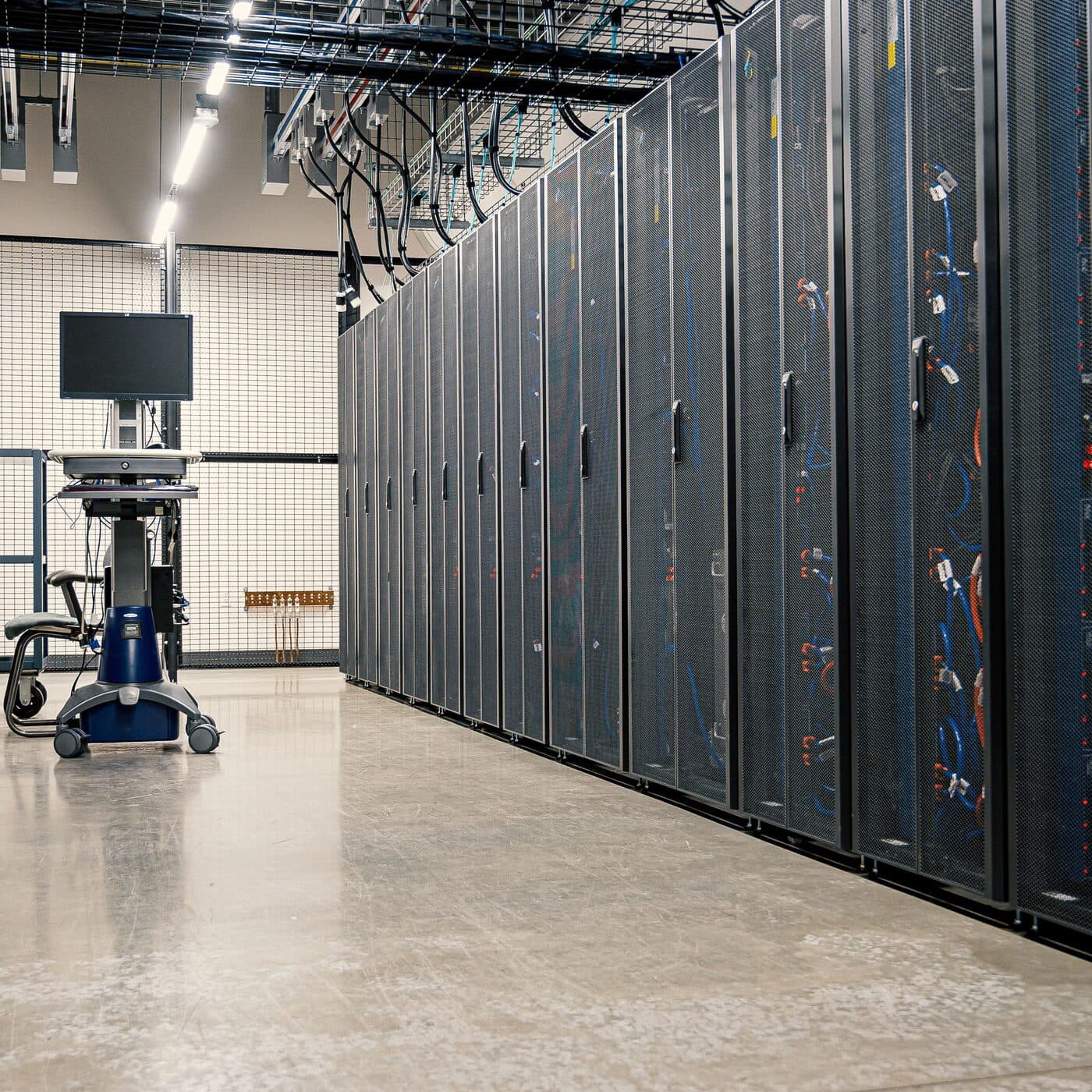
Four steps, and step 01 counts tenants rather than findings. We want every subscription, account and project written down with an owner's name against it, because the recurring discovery isn't a bad setting, it's an environment nobody claims. Orphaned subscriptions are where the open storage lives, and no posture tool reports an unowned subscription, because ownership isn't a technical fact.
Engagement phases
Phases 01 to 04
Inventory the estate
Every subscription, account and project with a named owner, a purpose and a data classification, including the ones nobody admits to. The gap between that list and your billing console is the first finding.
Score against a published benchmark
Posture assessed on the current CIS benchmark and the Cyber Centre's control profile rather than a platform's own secure score, with the gap between the two written down instead of averaged away.
Fix and then prevent
Our engineers close the findings, then block the same findings at the policy layer so the next deployment can't reintroduce them. A fix that only lives in the portal is a fix with a half-life.
Own the drift rate
A monthly re-score, a trend rather than a snapshot, and a named person who explains any movement to whoever asks. That person is ours until you'd rather it were yours.
Cloud security services questions, answered straight.
Answers first, including why your secure score isn't evidence and which Canadian document your auditor will actually open. An architect takes the call, not a salesperson.
Where this work connects.
These disciplines share the same senior team and tend to land together. Follow the thread to the next one.